

Rio de Janeiro is the second-largest city in Brazil and the most visited place in the country. The name ‘Rio de Janeiro’ literally translates to ‘River of January’ and was given to the city by Portuguese explorers who landed on Rio’s shores on 1 January 1502. Rio was also the capital of Brazil for almost 200 years before the title was transferred to Brasília in 1961.
In terms of nature, Rio has it all – rainforest-covered mountains, winding coastlines with stunning beaches overlooking the Atlantic Ocean, huge rock formations rising from the ground and the “Lagoa” (‘lagoon’) in the middle of the city, which you can cycle around. On top of that, its unique landscape means there are several great viewpoints around the city where you can enjoy amazing views of Rio from completely different angles. Within the first few hours of arriving there, it was fairly easy to see why Rio is one of Brazil’s top tourist destinations.
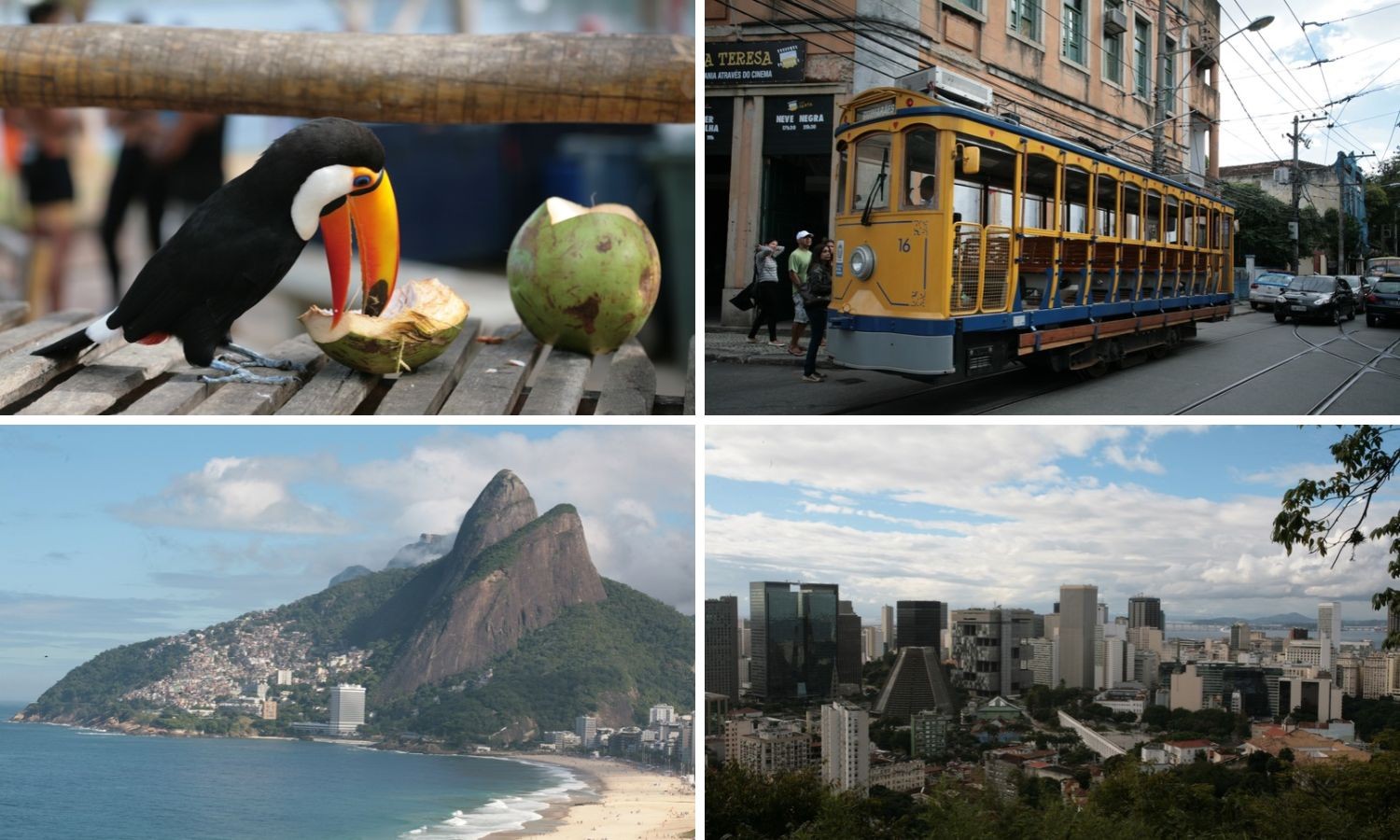 Photos taken on a Llama Travel tour by staff
I spent four days in Rio, and even though we didn’t exactly luck out with the weather, Rio still showed us why it’s so well known as the “Cidade Maravilhosa” (‘Marvellous City’). From walking in Tom Jobim’s footsteps in Ipanema while mumbling along to his most iconic song, ‘The Girl from Ipanema’ (“Garota de Ipanema”), to taking the tram through Santa Teresa and catching glimpses of “Cristo Redentor” (‘Christ the Redeemer’) from different parts of the city, Rio definitely left me with a ‘I must come back here someday’ feeling. There’s something about Rio that makes it difficult not to fall for it. Even with four days there, I felt like I had only scratched the surface, which is probably why I’d recommend this amazing city to anyone travelling to Brazil.
Christ the Redeemer
There are very few landmarks in the world that are so closely associated with the destination they are in, but "Cristo Redentor" ('Christ the Redeemer') is definitely one of them. Even people who have never been to Brazil will probably recognise the famous statue overlooking Rio de Janeiro, with its arms stretched out over the city.
I don’t think it’s an exaggeration to say that Christ the Redeemer has become a symbol not only of Rio, but of Brazil as a whole. It is one of the New Seven Wonders of the World and has become one of the must-see sights when visiting the city. While the statue itself is impressive, I think the real highlight is the view from the top of Corcovado Mountain, which gives you an incredible panorama across the city and the bay. It’s a completely different perspective of Rio, although just as impressive as the views from Sugarloaf Mountain.
 Photos by Nathalia
I decided to visit in the early morning in an attempt to beat the crowds. However, ‘Christ’ had other plans and gifted us with cloudy, rainy and hazy weather. Once we got the Corcovado Tram up the hill, it was clear that our views were not going to be perfect straightaway, as we could barely see the statue and the famous panoramic view of the city was covered in clouds. As we had a bit of time, we decided to stick around for a little while longer, grabbing ourselves a poncho, a coffee and a "coxinha de frango" ('chicken fritter') while we waited. Thankfully, the marvellous city decided to open up for us, and not long after, we were able to get a much better view of both the city and the monument itself.
The whole experience was incredible and definitely a ‘pinch me’ moment. It was every bit as phenomenal as everyone had told me it would be, and even though the weather wasn’t exactly perfect, it ended up making the experience even more unforgettable – and gave me a funny story to tell.
Sugarloaf Mountain
Rio is surrounded by hills and mountains, but there is one that really stands out: “Pão de Açúcar” (‘Sugarloaf Mountain’). Standing 396 metres above the city, it’s one of those places you instantly recognise when you see pictures of Rio.
There are a couple of stories about where the name came from. The most common explanation is that the shape of the mountain reminded the Portuguese of the moulds used to make concentrated loaves of sugar. There is also a theory that it comes from the Indigenous Tupi-Guarani name pau-nh-acyqua, meaning something along the lines of ‘high, pointed hill’. Either way, I think Sugarloaf is a much more memorable name!
The best way to get to the top is by cable car, or as the “cariocas” (the name given to people from Rio) call it, the "Bondinho do Pão de Açúcar". This "bondinho" has been running since 1912, making it one of the oldest cable car systems in the world. The journey is split into two stages: first, from the base to Morro da Urca, and then from Morro da Urca up to the top of Sugarloaf. Each ride only takes a few minutes, but the views get better and better as you go higher.
 Photos by Nathalia
And if the cable car looks familiar, there’s a good reason. It featured in the 1979 James Bond film Moonraker, during a fight between Bond and the villain Jaws. The scene has become quite iconic and, I have to admit, once you know about it, it’s hard not to picture James Bond hanging off the cable car as you’re travelling up. Now, I’m just wondering whether Robert Pattinson might make an appearance here too, as the new Bond!
Note: If you’d like to combine these two world-renowned landmarks, Corcovado Mountain and Sugarloaf, Llama Travel’s Iconic Rio optional excursion is a great way to do it. You’ll visit both sights with a guide, taking in some of Rio’s most famous landmarks, and stop for lunch at a traditional Brazilian steakhouse along the way.
Copacabana and Ipanema Beach
You can’t really say you’ve been to Rio without spending some time along its famous beachfront. There are dozens of beaches around the city, but Copacabana and Ipanema are by far the most well-known. The promenade itself is an experience, with its iconic black-and-white Portuguese-style paving, people walking, running, cycling and skating, and vendors selling everything from bikinis, beach sarongs and jewellery to fresh fruit and grilled cheese.
You’ll also find plenty of little beach kiosks, known as "barracas", where you can grab an ice-cold coconut, a beer or a fruity caipirinha and sit back and watch the world go by. I definitely recommend trying some "biscoito Globo" (a very Rio-style snack that you’ll see people eating all along the beach) and an açai while you’re here.
 Photos by Nathalia
When travelling with Llama Travel, you’ll stay at the Windsor California Hotel, right in the heart of Copacabana and just a short walk from the beach. From here, you can walk along the coast towards Leme in one direction, or head towards Ipanema and Leblon in the other. It’s a lovely way to explore this part of Rio, with the mountains constantly appearing in the background.
One of my favourite spots was Arpoador, the rocky peninsula between Copacabana and Ipanema. It’s one of the best places in Rio to watch the sunset, and you’ll see both locals and tourists gathering there in the evening to watch the sun disappear behind the Two Brothers Mountains, and I found this to be a beautiful way to end the day.
Santa Teresa
Santa Teresa was perhaps one of my favourite areas in Rio, and I personally think it is one of the most picturesque neighbourhoods in the city. Characterised by its cobbled streets lined with local galleries, cafés and bars, you can walk or take the old tram (“Bondinho de Santa Teresa”) across the neighbourhood, passing through the “Arcos da Lapa” aqueduct and by Rio’s iconic cathedral, which I did.
 Photos by Nathalia
You can hop on and off the tram at various stops, including one where you can walk to the “Escadaria Selarón” (‘Selarón Steps’), the colourful, tile-lined stairway created by Chilean-born artist Jorge Selarón. With its cobbled streets and turn-of-the-century homes on the hills overlooking Guanabara Bay, this colourful neighbourhood is home to many of Rio’s artists, musicians and poets, and is undoubtedly one of the most charming areas in the city.
Its cosy restaurants, bohemian bars and trendy shops are great for wandering around, watching locals go about their daily lives and getting a more authentic feel for Rio. You might stumble upon a group of musicians playing Bossa Nova, watch a local artist painting, or find a great spot to stop for a caipirinha.
 Photos by Nathalia
Note: Llama Travel offers a great optional excursion that takes you around Santa Teresa’s main sights with a guide and group. It’s perhaps one of the best ways to learn more about the history and importance of this unique part of Rio.
A stay in Rio is a fabulous way to end a trip to South America, and if these days have taught me anything, it’s how lively, colourful, and iconic this city is. I cannot wait to go back!
If you would like to visit Rio de Janeiro, you can see all of our Brazil holidays here.
Found this blog useful? Sign up to our newsletter for more holiday tips and advice!