

The Inca Trail is a four-day trek, beginning at a humble railway stop in Piscacucho, Peru, around 2.5 hours from Cusco, and culminating in an iconic view of Machu Picchu through the Sun Gate on its fourth and final day. It follows an ancient pathway between Cusco and Machu Picchu, traversed by nobility, priests and messengers at the height of the Inca empire in the 15th century.
Despite only encompassing around 43 kilometres of hiking across a four-day route, the Inca Trail involves steep ascents and descents as you travel through some of the Peruvian Andes’ highest and most challenging mountain passes and valleys. It is considered a strenuous hike and requires a good level of fitness to complete, but the views of the surrounding mountains, the Urubamba River valley, and the iconic Lost City of the Incas along the way are incredibly rewarding.
There is also the option of the 2-day/1-night Short Inca Trail, which swaps 43 kilometres of trekking for just 10-12 kilometres and overnight camping for a comfortable hotel in Aguas Calientes, near Machu Picchu.
If you are curious about what the Inca Trail and Short Inca Trail entail, this blog will break down each day of the trails, including the distance covered, altitudes reached and landmarks passed on each day.
If you are already set on adventuring to Peru to complete the Inca Trail yourself, Llama Travel can help. Many of our in-house Travel Experts have visited Peru themselves and completed the Inca Trail. They can provide wonderful insight into the experience and explain what Cusco, Lima, and other Peruvian & Latin American destinations have to offer to build your dream holiday.
Contact us here to speak to one of them and begin planning your holiday to Peru, or continue reading for a day-by-day breakdown of the iconic Inca Trail & Short Inca Trail.
Day-by-day on the Inca Trail
Day 1
Start point: Cusco/Piscacucho
Approximate walking time: 5-6 hours
Distance walked: 13 kilometres (8 miles)
Maximum altitude: 3,000 metres above sea level
End point: Huayllabamba
On day 1 of the Inca Trail, you depart Cusco early in the morning and ride a bus to Kilometre 82, a railway stop and checkpoint in a tiny village called Piscacucho, which serves as the gateway to the Inca Trail.
From Piscacucho, you officially begin the Inca Trail, following the Urubamba River for around 2 kilometres to Patallacta, an ancient Incan agricultural terrace and the first of many archaeological sites along the trail. From here, the trail gently climbs to Huayllabamba, a small village at 3,000 metres above sea level, where camp is set up for the night.
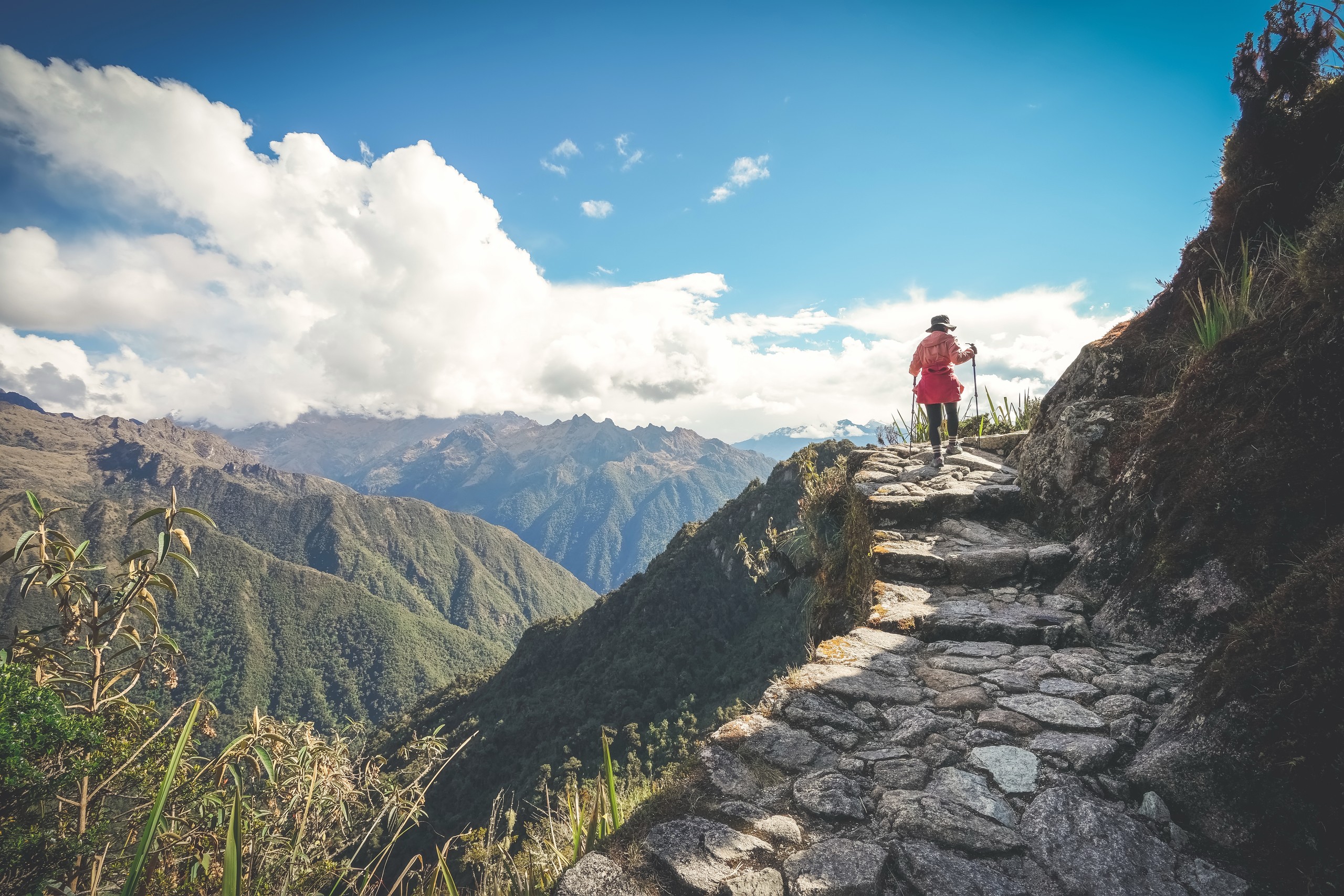 Day 1 is a relatively gentle introduction to the Inca Trail, before the challenge of Day 2.
Day 2
Start point: Huayllabamba
Approximate walking time: 6-8 hours
Distance walked: 15 kilometres (~9 miles)
Maximum altitude: 4,200 metres above sea level
End Point: Pacaymayo River valley
Day 2 is the toughest day of the Inca Trail. Navigating the first pass is incredibly strenuous, earning it the ominous nickname Warmi Wañusqa, Quechua for ‘Dead Woman’s Pass’. Most people reach the summit of the pass between 9 am and 11 am; the combination of the strong sun beating down and the sheer altitude, at over 4,200 metres above sea level, makes for challenging conditions. Despite the challenge, Warmi Wañusqa, the highest point along the Inca Trail, offers wonderful views, and can feel like a real achievement upon completion.
After completing the first pass, the trail descends into the valley of the Pacamayo River, where the camp for the second night is set up.
Day 3
Start point: Pacamayo River valley
Approximate walking time: 8 hours
Distance walked: 16 kilometres (~10 miles)
Maximum altitude: 3,950 metres above sea level
End Point: Wiñay Wayna/Phuyupatamarca*
Day 3 of the Inca Trail covers the most distance of the 4-day route, with incredibly rewarding views and fascinating Inca ruins along the way. Day 3 begins by scaling the second pass. Around halfway up the pass, the trail passes Runkuraqay, a large, semi-circular Incan ruin which likely served as a watchtower and resting place. At 3,950 metres above sea level, the Runkuraqay Pass offers wonderful views of the surrounding snow-capped Vilcabamba mountain range, with a slightly less challenging ascent than the Dead Woman’s Pass on Day 2.
After the peak, the path descends past the Sayacmarca ruin, a stone citadel surrounded by steep drops into the cloud forest below. After passing through an ancient Inca tunnel, the third and final pass of the Inca Trail ascends to around 3,800 metres above sea level. Passing the Phuyupatamarca ruins and its fine ritual baths, the trail rapidly descends ancient steps to the Wiñay Wayna ruins, near the final campsite of the trek.
The ruins of Wiñay Wayna, discovered in 1941, are among the most beautiful in all of the Inca Empire. The site was mainly agricultural, and the curved terraces on the incredibly steep slope are breathtaking. The name Wiñay Wayna was taken from a bright pink variety of orchid which blooms year-round, which, in turn, took its name from the Quechua for ‘forever young’
The camp on Day 3 is a highlight for many who complete the Inca Trail. It is generally the best-equipped, with cold-water showers, flush toilets and a small shop.
*Day 3 usually concludes near Wiñay Wayna, but the Peruvian Institute of Culture, which manages and regulates the Inca Trail, only confirms campsites shortly before departure. On occasion, the third day concludes in Phuyupatamarca. If this is the case, around two hours of walking are shifted from the third day to the fourth day, and the trail concludes at Machu Picchu around noon on Day 4, rather than the early morning.
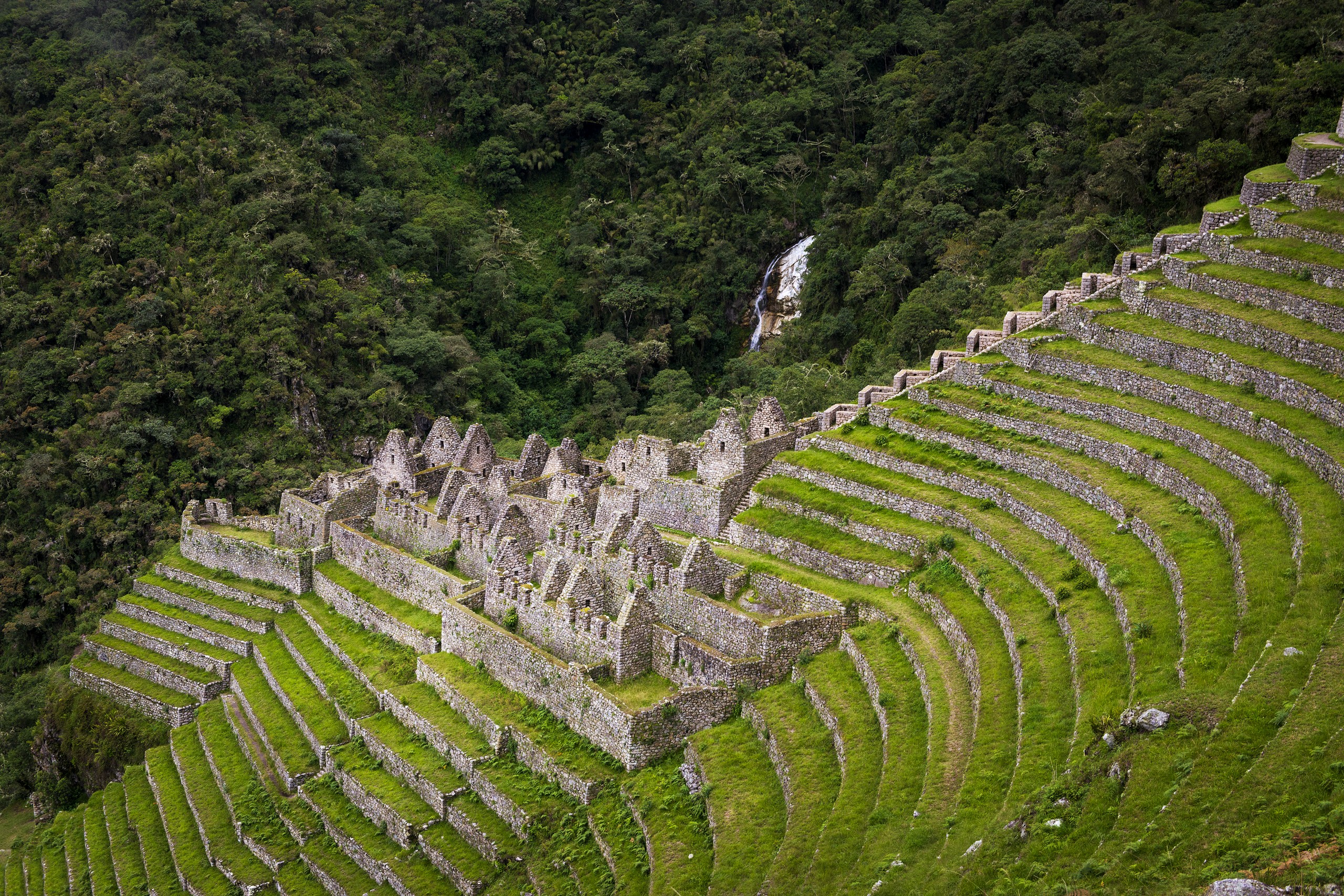 The Wiñay Wayna ruins are well-preserved remnants of an ancient Inca agricultural site.
Day 4
Start point: Wiñay Wayna/Phuyupatamarca
Approximate walking time: 2 hours
Distance walked: 6 kilometres (~3.75 miles)
Maximum altitude: 2,700 metres above sea level
End point: Machu Picchu
If camping overnight at Wiñay Wayna on Day 3, the group sets off before dawn for the 90-minute or so walk to the Intipunku (Sun Gate). The checkpoint at Wiñay Wayna opens at 5:30 am, meaning the group usually arrives at the Sun Gate between 7 am and 7:30 am. The early morning light makes the first view of Machu Picchu spectacular and well worth the 4-day journey. The trail down from the Sun Gate to the ruins themselves takes about half an hour, and a guided tour of the site is included. An afternoon train returns to Cusco in the late evening.
If staying in Phuyupatamarca, a slightly later departure and the additional two hours or so of walking on the final day mean the group arrives at Machu Picchu at around noon. In this instance, a later return train to Cusco is arranged to allow for the same time exploring Machu Picchu as those staying in Wiñay Wayna.
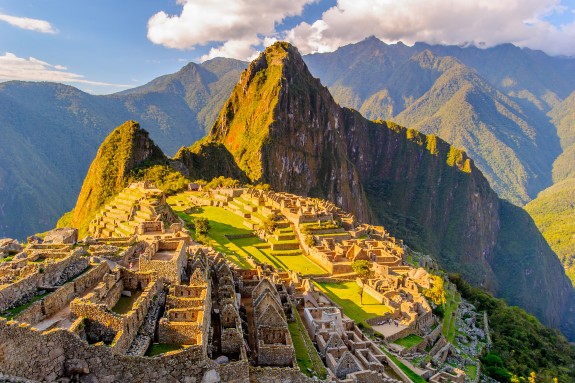 The first view of Machu Picchu is the ultimate reward for completing the Inca Trail.
Day-by-day on the Short Inca Trail
If you are short on time or you are unsure if the full, 4-day/45-kilometre Inca Trail is achievable, you can instead opt for the 2-day/14.5-kilometre Short Inca Trail. This abridged version, which is a section of the full trail, involves a walk from the Urubamba River to Machu Picchu, via Wiñay Wayna.
Day 1
Start point: Cusco/Kilometre 104
Approximate walking time: 5-6 hours
Distance walked: 10 kilometres (~6 miles)
Maximum altitude: 2,650 metres above sea level
End point: Machu Picchu
After an early coach and train ride from Cusco to Kilometre 104, you cross the Urubamba River to start the hike. Here, there are modern buildings with toilets, where you must register and show your entrance ticket and passport.
Just beyond the first checkpoint are the ruins of Chachabamba. The trail climbs rapidly, taking about three to four hours to get to Wiñay Wayna. The walk offers some very beautiful views of the ruins of Choquesuysuy visible below, next to the hydroelectric plant, and the Inca terracing of Inti Pata, on the hill in front. Just before arriving at Wiñay Wayna, the trail passes a beautiful waterfall.
After stopping for a packed lunch near Wiñay Wayna, you continue the trail, walking to the Intipunku (Sun Gate), taking about two hours. As you climb the final few steps and arrive at the Sun Gate, you are greeted by your first view of Machu Picchu. The trail down to the ruins themselves takes about half an hour. You do not visit the site on the first day, as it is too late, instead descending by bus into Aguas Calientes, the nearest village to Machu Picchu, where you spend the night in your hotel. The village of Aguas Calientes received its name from the hot springs, where you can bathe to unwind after the trek.
Day 2
Start point: Aguas Calientes
End point: Cusco
In the morning, a bus brings you back to Machu Picchu, where your guide will give a tour of the ruins, before you catch the afternoon train and coach back to Cusco, arriving in the evening.
Trekking is just one way to visit and experience Machu Picchu. With Llama Travel, you can choose to visit aboard a glass-roofed PeruRail train or the 1920s-style Hiram Bingham train, or stay overnight in nearby Aguas Calientes and return to visit the site a second time.
Speaking to one of our Travel Experts here is a great way to narrow down the best way to visit for you. You can browse all of our Inca Trail holidays or order a brochure here.