

The Inca Trail is one of the most aspirational travel experiences in the world: navigating the Peruvian Andes, passing ancient Inca ruins, and finally arriving at Machu Picchu on the final day can feel like a real achievement and is a wonderful way to explore the history, scenery and culture surrounding the Lost City of the Incas.
While many travellers consider the Inca Trail a bucket list item, many have questions around the practicalities of completing it, the history of the path, and the permit booking process. The article below addresses some of the most commonly asked questions we at Llama Travel have faced during our almost 25 years of sending our guests to Peru.
If you have any remaining questions, many of Llama Travel’s in-house Travel Experts have visited Peru and completed the Inca Trail themselves. You can contact one of them here or enquire about a specific Inca Trail holiday, and they will get back to you to answer any questions you may have and help you start planning your holiday.
Practical Information
What is the Inca Trail?
The Inca Trail is an ancient trail in Peru. It maps out an adventurous 43-kilometre trek which, in its full length, takes around 4 days to complete. The Peruvian government regulates the trail, protecting the ancient path from damage and overtourism, and managing/assigning the porters and guides who accompany tourists along the trail.
How long is the Inca Trail?
The Inca Trail spans around 43 kilometres. Those 43 kilometres are divided into 4 days of hiking, with the distance covered each day ranging between 6 kilometres (~3.75 miles) and 15 kilometres (~9 miles).
What is included on Inca Trail holidays?
Most of the general equipment required for the trail, such as tents, sleeping mats and cooking equipment, is provided and carried by the porters, who are assigned and managed by local tour operators, and travel the full length of the Inca Trail with each group. Warm sleeping bags and liners are also provided, or you can bring your own. A porter will carry your personal belongings up to a limit of 5kg per person.
All meals and some snacks are provided for the duration of the Inca Trail. If you want other snacks during the trail, these can be bought in Cusco or, if staying at Wiñay Wayna, at a small shop near the campsite. Boiled drinking water is provided after the meals. The meals provided on the Inca Trail are very good, with 3 courses. The porters put up communal tents to eat in for all meals, including lunch.
There are no hot showers along the Inca Trail except at the final campsite (if staying at Wiñay Wayna), but every morning and night you will be provided with a bowl of hot water to wash with.
There are some basic toilets along the Inca Trail provided by the National Institute of Culture. The porters also carry a portable chemical toilet which they put up in a tent at the lunch and camping stops.
Guides carry basic first aid supplies, but as you will be in remote mountain areas, more advanced medical facilities are not available.
What does a day on the Inca Trail look like?
Each day on the Inca Trail is slightly different; some days involve up to 8 hours of walking, while the final day (the descent to Machu Picchu) involves just 2 hours of walking.
Local porters dismantle tents and dining facilities while hikers have breakfast in the morning, and, after getting a head start during the day, set up camps so they are ready for the group’s arrival in the evening. Each porter carries up to 5 kilograms of luggage per hiker
Most days involve an early rise to cover the most distance possible before the peak of the midday sun, with stops for lunch and snacks along the way.
Is the Inca Trail safe?
Yes. The Peruvian Ministry of Culture operates essential protection work and structural repairs annually to make the Inca Trail as safe as possible.
Most of the risk associated with the Inca Trail is shared by most mountain treks. Altitudes along the trail peak at around 4,215 metres above sea level, so it is important to acclimatise to high-altitude conditions before attempting the trail. Llama Travel holidays include a few days in Cusco prior to completing the Inca Trail to adjust for the altitude.
Due to the sheer isolation of the trail, medical services are limited, so it is recommended to be in good health and carry any required medication before you set off on the trek.
Navigating ancient stone steps and pathways may be tricky, so wearing comfortable but supportive hiking boots or walking shoes is essential to mitigate the risk of ankle sprains or joint strains.
Booking the Inca Trail
Do I need a ticket to do the Inca Trail?
Yes. Completing the Inca Trail requires you to book permits with a licensed tour operator like Llama Travel. You cannot complete the trek independently or without permits and porters, as mandated by the Peruvian government.
There are 500 permits available each day, and only around 200 of those are for tourists: the remainder are allocated to mandatory guides and porters who accompany each group.
Passes sell out quickly: we recommend booking as early as possible to avoid missing out on what is considered by many as the trek of a lifetime. Passes go on sale in the last few months of the year for the subsequent year.
Signing up to Llama Travel’s newsletter or following us on social media is the best way to hear about when passes and our Inca Trail holidays go on sale each year.
How do I book the Inca Trail?
You must book permits to complete the Inca Trail through an authorised tour operator, like Llama Travel. We offer Inca Trail permits as part of holidays in Peru, combining the trek with stays in Cusco, Lima and other destinations in Peru.
Enquire about our Inca Trail holidays here or contact us to talk about our various holiday options if you are looking to complete the trek.
How much does the Inca Trail cost?
You can only book Inca Trail permits as part of a wider holiday package with an authorised tour operator. Depending on which destinations you add on to your holiday in Peru and when you travel, Llama Travel holidays including the Inca Trail start from £3,099 for a 14-day holiday, including flights from the UK and stays in Lima and Cusco.
How far in advance do I need to book the Inca Trail?
Demand varies throughout the year. During Peru’s peak hiking season between June and August, when the Inca Trail is busiest, permits can sell out as far as 6 months in advance.
For less busy periods, booking at least 3 months in advance is recommended to avoid disappointment.
Is the Inca Trail open year-round?
The Inca Trail is not open year-round, typically closing in February for cleaning and conservation efforts by the Peruvian Ministry of Culture. This means the Inca Trail is open from March 1st to January 31st each year.
When is the best time to do the Inca Trail?
There is no bad time to complete the Inca Trail. Each season offers a different but equally fulfilling experience.
At Llama Travel, we operate our Inca Trail holidays between March and November.
The dry season from May to September generally offers the best weather, but during June, July and August, permit availability can be an issue, and crowds are likely to be bigger, especially around Machu Picchu.
The shoulder seasons (March/April, October/November) generally offer more moderate weather, lush green scenery on the back of/ahead of the winter rains, and better availability.
How big are groups on the Inca Trail?
On Llama Travel holidays involving the Inca Trail, 16 people is the maximum group size, though this is often smaller.
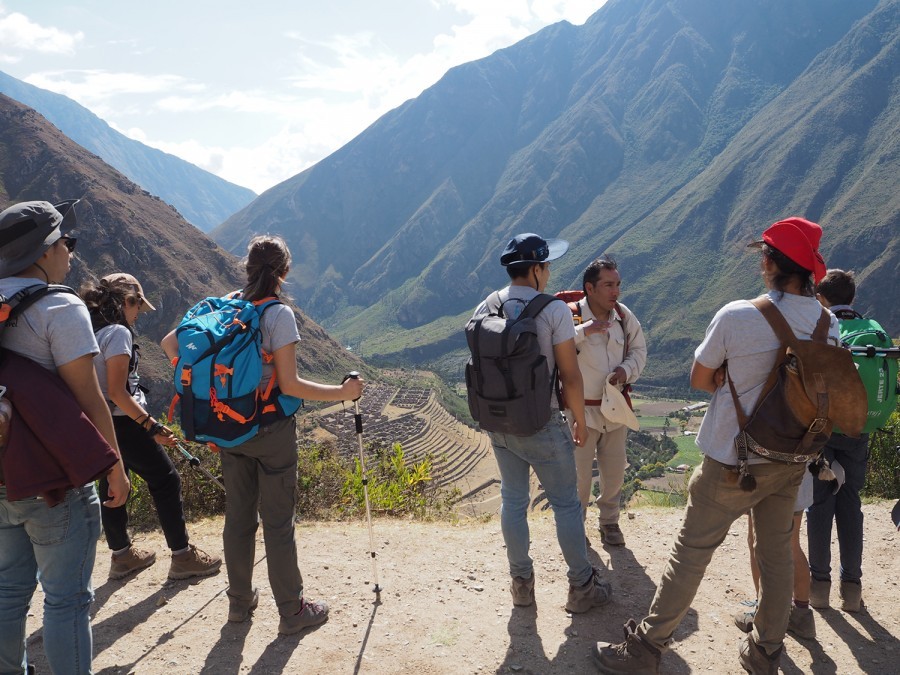 Group sizes on the Inca Trail vary, but Llama Travel holidays have a maximum group size of 16 groups.
What if I forget to book my Inca Trail permits?
When purchasing Inca Trail permits, they are registered with a full name and passport details. Therefore, they cannot be transferred, nor resold or bought from a third party or fellow traveller.
If you haven’t yet purchased your Inca Trail permits and they have sold out, you must consider an alternative, and there are some good options in that instance.
What are the alternatives to the Inca Trail?
If Inca Trail permits are unavailable or the prospect of a 4-day, 45-kilometre hike is too daunting, there are other alternatives.
The Short Inca Trail is a 2-day, 1-night abridged version of the Inca Trail, only spanning the length from the Urubamba River to Machu Picchu. This version encompasses about 9 miles of walking, all on the first day. We have a day-by-day breakdown of the Short Inca Trail available here.
Permits for the abridged version of the Inca Trail operate in much the same way as the full trek: you must book through an authorised tour operator like Llama Travel, and while only 300 or so permits are issued a day, there is less demand for the short version. Even so, the peak season especially can sell out far in advance, so we still recommend booking between 4 and 6 months before travel.
The Salkantay Trek is another good alternative to the Inca Trail. There is no permit or tourist limit, although there tends to be around 50 a day, meaning it is less-trodden and less-known than the Inca Trail. You can find out more about the Salkantay Trail in its dedicated section on this page.
If you don’t want a multi-day trek to Machu Picchu, you can visit the iconic site in many ways. Llama Travel’s excursions range from a day trip aboard the glass-roofed PeruRail train, a journey aboard the 1920s-style Hiram Bingham train for a more premium experience, to an overnight stay in Aguas Calientes. We recommend speaking to one of our in-house Travel Experts to narrow down the best option for you: you can do so by filling in the form here or making an enquiry for any of our Peru holidays here.
The history of the Inca Trail
What was the Inca Trail used for originally?
The Inca Trail was used by royalty, priests and messengers in the Inca Empire to travel from Cusco, the Empire’s administrative capital, to Machu Picchu, a royal estate and ceremonial site.
How old is the Inca Trail?
The Inca Trail itself is between 500 and 600 years old. The construction of the trail was ordered by Emperor Pachacutec, who ruled over the Inca Empire between 1438 and 1471.
The Inca Trail is a relatively short section of a longer, 40,000-kilometre (25,000-mile) network called the Qhapaq Ñan (Quechua for the ‘Royal’ or ‘Great Road’), built by Pachacutec and his successive Inca rulers through Argentina, Bolivia, Chile, Colombia, Ecuador and Peru.
The Peruvian section between Cusco, the Incan administrative capital, and Machu Picchu, a religious and royal centre, is deemed especially important. This area of the path was well-trodden by royal and religious leaders travelling between those two centres. Messengers would frequently tackle around 10 kilometres of the trek each before passing on their message to the next traveller. Much of that section is what is today known as the Inca Trail.
Some of the stone paths and structures along the trail date back to before the Inca civilisation.
When was the Inca Trail opened for tourists?
Hiram Bingham’s ‘discovery’ of Machu Picchu in 1911 led to early explorations of the paths leading to and from the Lost City of the Incas. It wasn’t until the 1970s that the Inca Trail specifically became popular among backpackers and mountaineers.
Still, it took around 20 years for the Peruvian government to begin to restore and regulate the trail: in 2001, they introduced strict permit systems and banned llamas and pack mules to protect the ancient paths and structures.
The Salkantay Trek
Where is the Salkantay Trek?
The Salkantay Trek navigates the Vilcabamba Mountain Range in the Peruvian Andes, beginning in Challacancha, northwest of Cusco, and culminating near Aguas Calientes, the gateway town to Machu Picchu.
How long is the Salkantay Trek?
The Salkantay Trek covers around 76 kilometres (~47 miles) across a 5-day route.
What are the differences between the Inca Trail and the Salkantay Trek?
The Salkantay Trail takes 5 days, adding an extra day to the 4-day Inca Trail and covering an additional 30 kilometres (20 miles or so), thus offering a greater challenge than the classic Inca Trail, reaching altitudes of around 4,630 metres above sea level, while the famous ‘Dead Woman’s Pass’ marks the highest point of the Inca Trail at around 4,215 metres.
While the Inca Trail is lined with fascinating ancient ruins, the Salkantay Trail takes in more dramatic valleys and passes, and is home to wild deer, chinchillas, condors and spectacled bears.
With no strict permit limit on the Salkantay Trek, availability tends to be better than the in-demand Inca Trail, although Llama Travel’s Salkantay Trek holidays still include guides and porters to ensure a safer and more comfortable experience.
We have an in-depth blog article breaking down the exact differences between the Inca and Salkantay trails, which you can read here.
Whether you opt for the Inca Trail, the Salkantay Trek, or one of the other wonderful ways to visit Machu Picchu, Llama Travel can help. We began operating as a Peru specialist almost 25 years ago, and we know the destination better than anyone else.
We are an authorised operator for Inca Trail permits, and many of our in-house Travel Experts have completed the challenge or visited Machu Picchu themselves. They know our holidays inside-out and can help you narrow down the right one for you. Contact us here to begin planning your adventure on the Inca Trail.