
-
Latin America
Latin America
- Countries (hidden space)
- Galapagos & Ecuador
- Guatemala
- Mexico
- Panama
- Peru
- Popular Attractions
- Machu Picchu
- Inca Trail
- Easter Island
- Galapagos Islands
- Patagonia
- Rio de Janeiro
- Iguazu Falls
-
Africa
Africa
- Spacer Africa
- South Africa
- Zimbabwe
- Popular Attractions
- Cape Town
- Okavango Delta
- Sossusvlei Dunes
- Victoria Falls
- The Kruger
- The Garden Route
- Masai Mara
-
Asia & Middle East
Asia & Middle East
- Asia
- Borneo (Malaysia)
- Cambodia
- India
- Japan
- Middle East
- Jordan
- Spacer Asia
- Laos
- Sri Lanka
- Uzbekistan
- Vietnam
- Popular Attractions
- Taj Mahal
- Lion Rock (Sigiriya)
- Angkor Wat
- Ha Long Bay
- Kyoto
- Petra
-
Destinations
- Latin America
- Argentina
- Bolivia
- Brazil
- Chile
- Colombia
- Costa Rica
- Galapagos & Ecuador
- Guatemala
- Mexico
- Panama
- Peru
- Asia
- Borneo (Malaysia)
- Cambodia
- India
- Japan
- Laos
- Sri Lanka
- Uzbekistan
- Vietnam
- Middle East
- Jordan
- Southern & East Africa
- Botswana
- Kenya
- Namibia
- South Africa
- Zimbabwe
- Contact Us
-
About
About
Llama Travel provides high quality holidays at the lowest possible prices.
99% recommend us Lower prices - guaranteed Financially protected by ATOL
A first-timer’s guide to safari
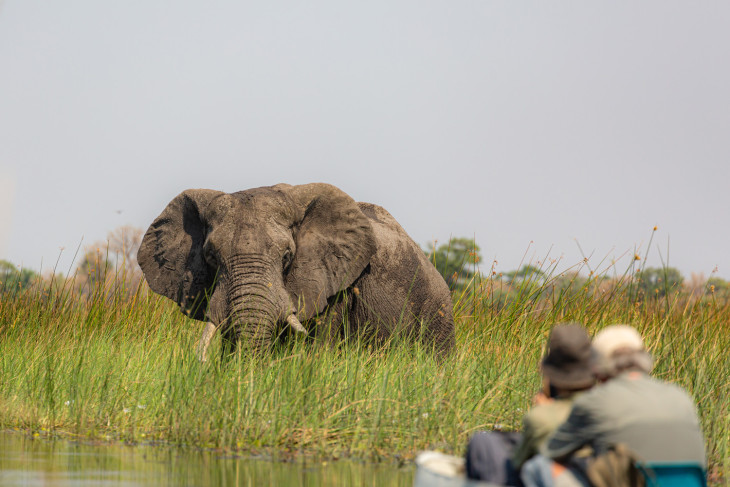
For many people, a safari holiday is one of the most aspirational travel experiences on earth. It can, however, be daunting, too. In Llama Travel’s nearly 25-year history of selling holidays, we have heard many customers’ concerns about visiting a new place or experiencing a different kind of holiday for the first time. The most common questions from first-timers considering a safari holiday often relate to wild camping, the heat on the plains, and the early wake-up calls for game drives.
Libby, a Product Executive on Llama Travel’s expert team, had many such concerns before her first safari experience. In this blog, she breaks down her experience as a first-timer on safari, addressing some of the common questions and concerns our customers voice before committing to a safari holiday—and, more often than not, having an excellent experience when they travel.
I recently returned from a trip to Botswana and Zimbabwe on the Llama Travel Delta Mobile Safari & Victoria Falls itinerary. During my trip, I spent time on a mobile safari, pitching up in Moremi National Park and Mababe Private Conservancy in the Okavango Delta. As a safari novice, I had many questions about what to expect on safari, the quality of the campsites, and general safari etiquette before I arrived. With the benefit of hindsight and after my incredible experience, I have realised I had nothing to worry about!
This guide should quash some of those concerns and offer a valuable insight into travelling to Botswana and experiencing a mobile camping safari for the first time.
What to know before you go
Given that Llama Travel has sold African safaris for over half a decade, I was lucky to have some expert colleagues who had been on safari before. Tapping into that knowledge was very helpful—especially when it came to what to pack.
When it comes to your holiday wardrobe, being prepared for the weather on safari is the most important factor. The mornings tend to be quite cool, especially during the winter months, when it can be below freezing overnight. This is why packing multiple layers of clothing is important. Layers will allow you to stay warm first thing in the morning, with scope to stay cool as the day heats up. A light long-sleeve shirt is useful during the hotter part of the day to protect from the sunKeeping the colour of your clothes in mind is also important on safari. The most important thing to remember is to avoid bright colours. Wearing browns, khakis, and greens will help you to blend into the background of the bush and not alert or alarm the wildlife.
Aside from clothes, there are a couple of miscellaneous items you may want to bring, such as a pair of binoculars or earplugs. Although you could get very close to the wildlife while on safari, having a pair of binoculars will allow you to spot the animals at greater distances or with that little bit more detail. On a mobile safari, as you are staying in canvas tents, you can hear all the wonderful sounds and noises of the bush. While this is a lovely experience at night, when it comes to getting some much-needed rest, the lighter sleepers may want to use earplugs for a quieter night’s sleep.
Luckily, I had Llama Travel’s safari packing list to hand to make sure I didn’t miss any of the other safari essentials!
A day in the life on a mobile safari
A Letaka mobile safari is as close to luxury as you can get while remaining wild.
When you arrive at the chosen campsite, you’ll be assigned a tent, which remains yours—even if you change locations.
Inside your tent, you’ll find a proper bed (much more comfortable than a roll mat!), a bedside table, some shelves to store clothes and an LED light. At the back of the tent is an enclosed outdoor ensuite with a drop toilet and bucket shower, which will be filled with warm water every day.
Outside your tent, there is a small porch area with a cosy camping chair, a pop-up water basin (filled with fresh hot water every morning and evening) and a little mirror. It should be noted that there is no electricity in the tent besides the light. Not to worry, though—if you have devices you would like to charge, there are electrical outlets on your safari vehicle which can be used during the day.
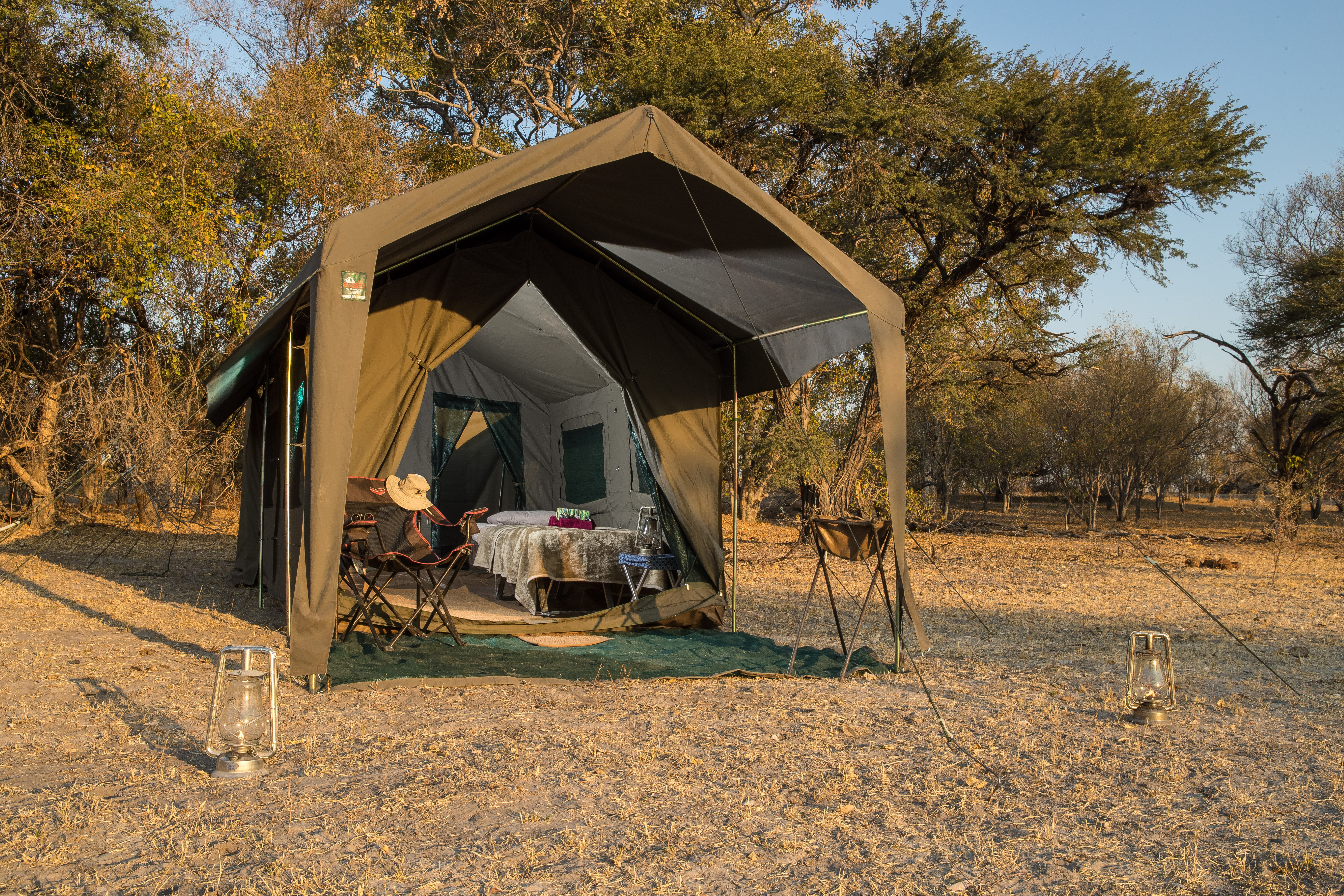
A Letaka Safaris tented mobile safari strikes the perfect balance between immersion and comfort.
A typical day on safari starts with an early morning wakeup call from one of the camp helpers. This is normally at around 5 am. At this time, the camp helpers will prepare a basin of warm water for washing before breakfast. At around 5:30 am, a light breakfast is served, normally consisting of freshly baked bread, a variety of jams and spreads, yoghurt and fruit with tea, coffee, or hot chocolate to wash it down.
At 6 am, hop into the safari vehicle and head out on an early morning game drive. As it is cooler, this is often when animals are most active, which is why early mornings often offer some of the best wildlife-spotting opportunities. Midway through the game drive, stop in a scenic spot for a light refreshment of a hot drink and some rusks or biscuits. Then continue your game drive before returning to camp at around 11 am for an early lunch and time to relax. Lunch normally consists of a freshly baked main dish alongside a variety of salads. After lunch, there is some time to recharge. It is at this time that the camp helpers will be happy to prepare a bucket shower for you.
Just before your afternoon game drive, afternoon tea is served with cake and hot drinks, and then you head out on an evening game drive to spot more wildlife. After the heat of midday, animals become more active as it becomes cooler. Just as the sun begins to set, you’ll stop in another scenic location for a sundowner, where your guide will serve a choice of soft or alcoholic drinks with a snack. Then continue looking for wildlife returning to camp just as it goes dark. Back at camp, a three-course dinner will be ready waiting for you. After dinner, enjoy a couple more drinks around the campfire before heading to bed.
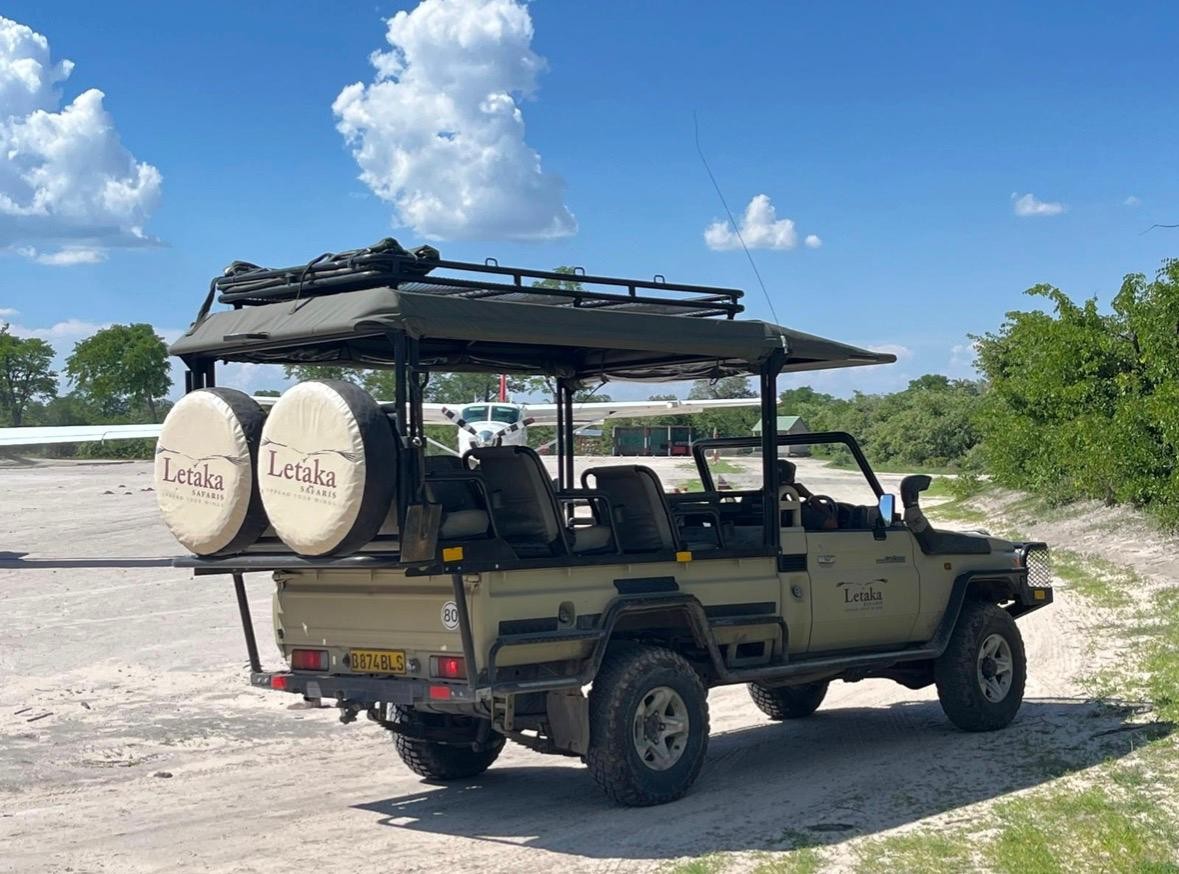
Letaka Safaris’ game drive vehicles are comfortable, with great views from every seat and charging facilities on-board.
Wild wonders
Within five minutes of our first game drive, we very luckily stumbled across a leopard with two young cubs. Seeing a leopard was amazing, but with two adorable cubs as well just made the experience even more magical. It was clear that the leopard did not feel any threat or danger as she allowed her cubs to continue exploring and playing, and didn’t shield them from us. What truly made this moment was that the leopard remained in the area for the coming days, so we went back to see the leopard and her cubs every day. A particularly cute moment came on our final day in the area, as one of the cubs had made its first kill. Watching the cub parade its catch in front of its mother was special.
Safari surprises
Knowing I was adventuring out to the remote Botswanan bush, I was prepared to feel like I was in the middle of nowhere, but just how few other people we saw really struck me. In Moremi National Park, there were so few other safari vehicles that we only really saw one or two others at lucrative sighting locations; the rest of the time, it was mainly just my group.
When we moved into the Mababe Private Conservancy, it was even quieter, with only one other safari vehicle passing by a day. This made the trip even more special. Being the only people at most sightings meant the wildlife remained relaxed and would often stay with us for quite a while; it felt like we were truly seeing them in their natural state.
Are safari holidays first-timer-friendly?
From experience, I would have to say it offers a great and comfortable experience for first-timers. Having expert guides and small groups of up to 7 people gave me ample opportunity to take in explanations of wildlife behaviours and ask any questions that I had. The small group sizes also ensured that everyone had a window seat in the vehicle, making sure everyone had the best view.
Sharing wildlife stories around the campfire, chatting during leisure times and bonding throughout the holiday experience allowed me to settle into the experience even quicker than I expected.
The thought of a return to safari has enticed me ever since I’ve been back from Botswana—so while it is a great first-timer’s destination, I totally understand the appeal of a repeat visit!
If you still have questions about whether or not a safari holiday is for you, contact one of Llama Travel’s Travel Experts here. We have almost 25 years of experience in selling holidays, and our in-house team has decades of combined experience. Many, like Libby, have experienced our safari holidays first-hand and can build the perfect holiday for you.